A Generation’s Voice: Peaceful Resistance, Civic Solidarity, and Street Art
«Freedom, Peace, and Justice — Revolution Is the People’s Choice»
On 19 December 2018, protests ignited in the historic railway city of Atbara and rapidly spread across towns and villages throughout Sudan. From the outset, crowds raised a unifying civic call: “Freedom, Peace, and Justice” and “Silmiya” (Peaceful).
Sudanese women—celebrated as Kandakas—stood at the forefront alongside youth neighborhood resistance committees and the Sudanese Professionals Association, sustaining months of disciplined nonviolent marches, vigils, and general strikes.
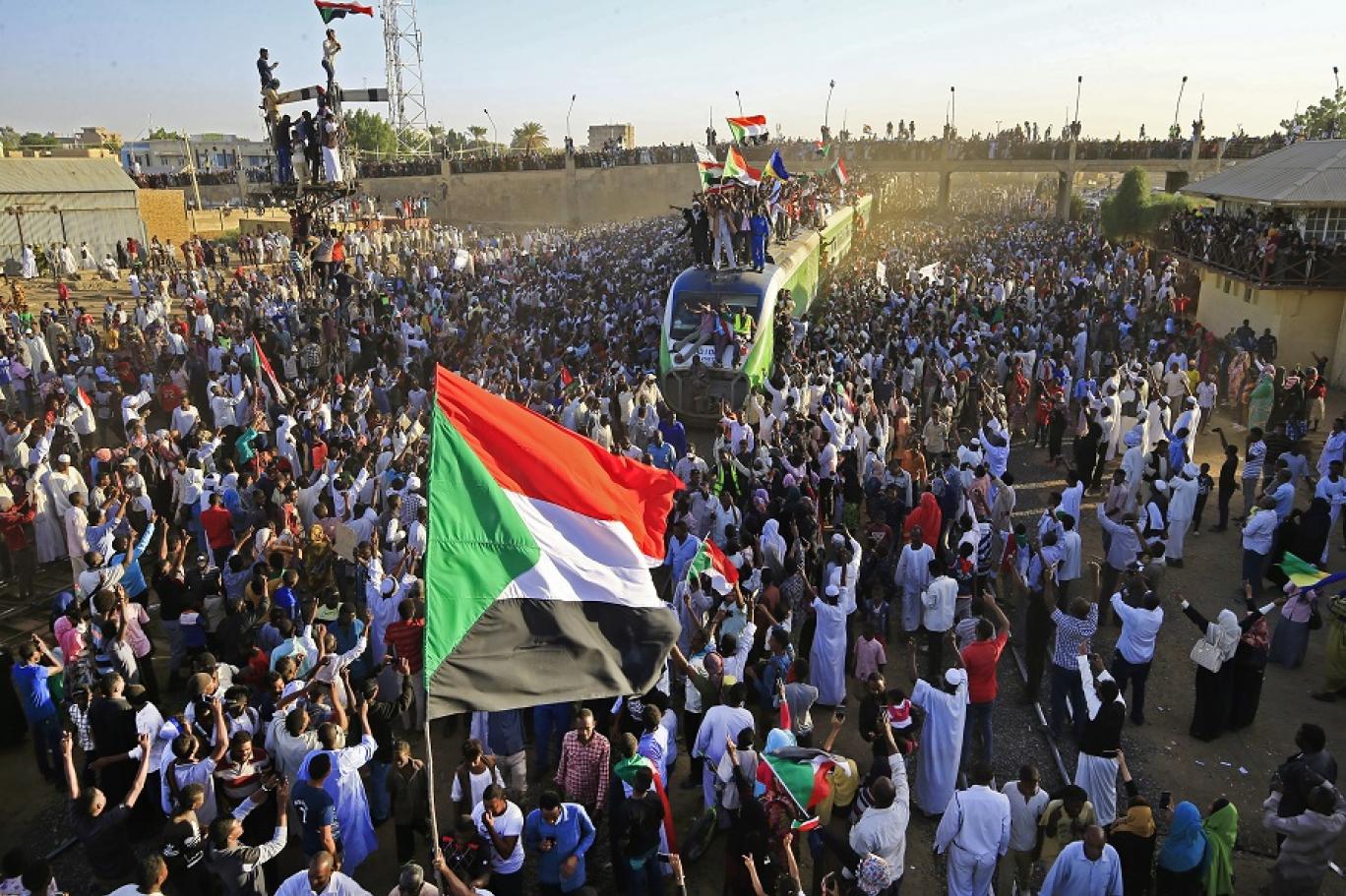
On 6 April 2019—commemorating the 1985 uprising—hundreds of thousands converged on the General Command in Khartoum to launch a historic sit-in. It blossomed into a self-organized civic square filled with murals, poetry, field clinics, communal kitchens, live music, and the joyous arrival of the Atbara Train, leading to Omar al-Bashir’s removal on 11 April 2019.
Key Historical Milestones
19 December 2018
Protests spark in Atbara and Damazin and spread peacefully across Sudan’s states.
Dec 2018 – Mar 2019
Weekly marches organized by professionals and neighborhood committees, with women at the forefront.
6 April 2019
On the anniversary of April 1985, crowds converge on the General Command to begin the historic sit-in.
11 April 2019
Omar al-Bashir is ousted after 30 years in power; the sit-in grows with the arrival of the Atbara Train demanding civilian rule.
